
Why Proton Therapy
TREATMENT OPTIONS
Standard cancer treatment options for patients include surgery, chemotherapy and radiation therapy. While all of these options may offer varying levels of benefit for a cancer patient, proton radiation therapy is often especially effective against localized cancers — it may even be utilized in conjunction with other treatments, or as a nonsurgical, noninvasive alternative to more traditional treatment modalities. 3-15, 17-24, 31
Benefits of Proton Therapy
Proton therapy continues to be an innovative and effective cancer treatment option, which is why it’s FDA-approved and part of the standard of care for many cancer types.1-2, 17-24 It’s also covered by a multitude of private insurance companies, Medicare and state Medicaid programs.25, 31 Proton therapy is noninvasive and the actual beam of protons is only delivered for several minutes per session. Due to proton therapy’s targeted design, patient’s experience few side effects because damage to healthy tissue and organs can be limited. Studies have even shown that compared to traditional radiation treatments, proton therapy may significantly decrease the estimated risk of developing secondary malignancies.6, 9, 14, 26
Proton Therapy vs. Traditional Radiation
Both proton therapy and traditional radiation treat malignancies the same way: by inhibiting the growth of cancer cells. The largest difference between the two is that proton therapy releases the bulk of its energy at one specific, concentrated area — radiation goes exactly where it’s supposed to go. Because of this, physicians are able to act more aggressively, increasing the radiation dosage while limiting damage to healthy tissue and organs.3-4, 6-8, 15
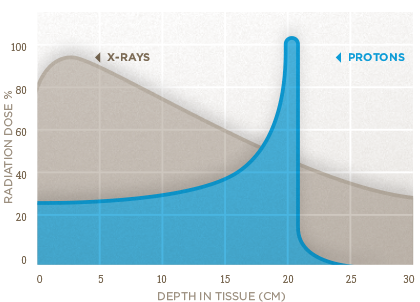
The Bragg Peak
The Bragg Peak is the pinnacle of ionizing radiation as it travels through matter. Traditional radiation must begin with a powerful dosage due to the significant loss of energy that occurs as it enters the body.33 Conversely, proton radiation is able to limit radiation dosage until the necessary treatment point, meaning less harm to healthy sectors of the body.5, 9, 11, 12
Learn more about how proton therapy works.
Treatment Experience
Proton therapy may be seen as a desirable alternative treatment for cancer because of its unique treatment experience. Proton therapy is noninvasive and the actual beam of protons is only delivered for several minutes per session. Depending on the specific case, patients typically receive these daily outpatient treatments for a number of weeks, with treatment plans varying based on tumor type, location, size, etc. Because of proton therapy’s noninvasive nature, many patients report limited side effects, with most feeling well enough to enjoy the many benefits that the Hampton area has to offer.3-4, 6-8, 15
Proton Therapy Side Effects
Most patients experience few side effects from proton radiation. Minor side effects such as fatigue, localized hair loss or skin irritation may occur in some cases. More serious complications are possible, though rare, depending on the tumor location and other factors.
A Focused Treatment For Cancer
When confronting cancer, there are countless paths towards recovery, each with their own benefits and challenges. Proton therapy is one of those paths, delivering effective, focused radiation treatment for a multitude of cancer types.3-15, 17-24 While similar to conventional radiation, proton therapy delivers a much more precise dose of energy to the targeted area, often resulting in fewer side effects and less damage to surrounding tissue and organs as compared to traditional cancer treatments.3-9, 11-12, 15 As an alternative to traditional therapies, proton radiation is noninvasive and lasts just a few minutes for each session, allowing many patients to continue leading their regular lives with few challenges.3-4, 6-8, 15
Having been used to treat cancer since 1990, proton therapy is part of the standard of care for many cancer types, is FDA-approved and covered by Medicare, Medicaid and most insurance providers.1-2, 17-25
In the decades since its initial use, proton therapy has helped tens of thousands of people and their families, becoming a well-established alternative to traditional cancer treatment, while continuing to evolve as an innovative path in cancer therapy.
Learn more about proton therapy and how it’s treating today’s cancers.